
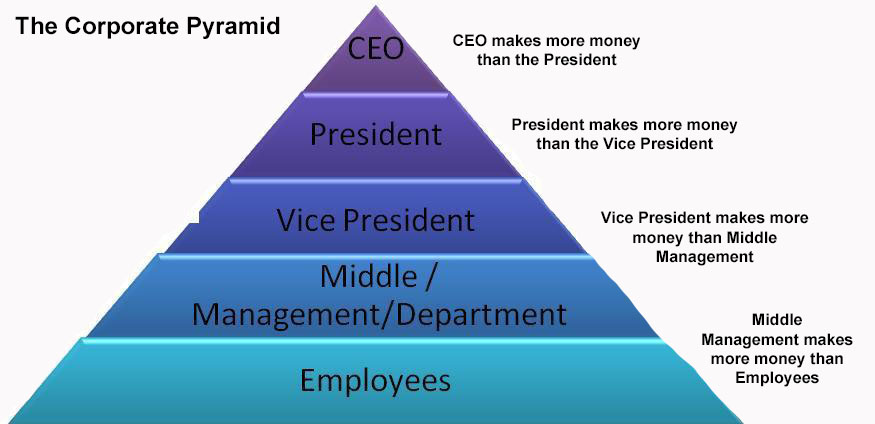
First and foremost, this post is not meant for me to tell you what’s right or wrong. I completely understand that some people are passionate about their jobs, and that’s great. I also genuinely believe that there are several jobs out there that are extremely vital – teachers, police, firefighters, counselors, therapists, doctors, nurses, surgeons, etc.
But just one year ago I graduated from college, and I remember how I felt looking towards the future. The thought of working a job for 40-50 years, while just living for the weekends and that one vacation each year to escape my responsibilities, really freaked me out. Especially because I had no idea what I wanted to do. It wasn’t until I got connected with my mentors and they provided their perspective did I really get excited about the future. So this post is for those who can relate to where I was last year, or to those who maybe are just simply eager for more out of life.
I’d like to use this space to provide some facts — not opinions — and offer a perspective that you may not have been exposed to before. Whether jobs offer security or they’re a liability, that’s for you to decide.
A few fun facts from the Bureau of Labor Statistics…
- Last updated in 2018, the average employee stays at a company for 4.2 years
- The reported average rate of inflation in the United States is 1.9%
- The average raise given to an employee is 2.9%
In other words, assuming you get one raise a year (which often does not happen that frequently), after factoring in the rate of inflation, you’re only earning an extra 1% per year. At a salary of $60,000 — this would be an extra $600 per year, or $50 per month (not including taxes).
And what is ultimately the goal of any business?
To increase profits and decrease expenses.
The biggest expense to any business? Employees.
There is undeniably a huge conflict of interest here. Businesses want to profit as much as possible with as little expenses as possible, while employees want to be paid as much as possible.
Artificial intelligence will be replacing many, many jobs in the very near future. If business owners had the choice of paying someone a salary and benefits to do a job or to have robots do it for free, which do you think they’ll choose?
Experts in artificial intelligence predict that 40% of the world’s jobs will be replaced by robots capable of automating tasks within the next 15 years.
If you have a job, there really is only one guarantee. And that is that one day you will eventually lose it. Whether you quit, get fired, retire, doesn’t matter. No matter what, one day you will lose it.
The incredibly fast-pace of the world we live in today
Quoting ‘Mind the (Skills) Gap’ from Harvard Business Review: “The lessons learned in school can become outdated before student loans are paid off.”
The world is changing now faster than ever, and there are no signs of it slowing down anytime soon. Technology, social media, and the competitive nature of the workforce today will not allow it to slow down. The rate of change is actually predicted to continue to keep increasing.
With the world changing so quickly, this will demand substantial changes to jobs as well. For the jobs that do not get replaced by artificial intelligence, employees will need to constantly be learning new skills in order to keep up with the rest of the world. To keep up with an ever-changing workforce, you’d think that the education system would be changing too right?
Here is a picture of what schools looked like back in the 1800’s.

And here is a picture of what schools look like today.

Not to get too off-base here, but in a world that is changing so rapidly, the way in which society is attempting to prepare people for jobs has not changed at all. The education system was first implemented back in the 1800’s to crank out factory workers, and this model is still accepted today to prepare people for jobs that are constantly changing.
While the internet today allows for information to be shared freely amongst anyone, if using the right resources, you can arguably learn way more from internet research, watching YouTube videos, or enrolling in online courses than you could from just sitting in a classroom for hours being forced to memorize a bunch of information.
I graduated from college only one year ago and honestly, I couldn’t tell you a single thing I learned in college that is still relevant to what I’m doing for work today.
There’s clearly a big disconnect from our education system to the workforce today.
At the end of the day, yes, your job will pay you.
Whether you think you’re paid what you’re worth or not is up to you. If you do think you’re paid what you’re worth, that’s great. If you’re happy with the work you’re doing and the people you work with, that’s great. I’m truly happy for you.
What I’ve found though, is that employees are paid what the job is worth — not what their time is worth. And maybe the people and the work you’re doing is great, but what if you could have the freedom to choose how to spend your time each and every day? Who would you spend it with? What would you do? And where in the world would you choose to do it?
In life, you will ultimately end up working hard for someone. It’s up to you to decide if you want to work hard for someone else and build their dreams, or work hard for yourself and build your own dreams.
One of my favorite quotes from the book The Entrepreneur Roller Coaster is:
“All human beings are entrepreneurs. When we were in the caves, we were all self-employed… finding our food, feeding ourselves. That’s where human history began. As civilization came, we suppressed it. We became ‘labor’ because they stamped us, ‘You are labor.’ We forgot that we are entrepreneurs.”
It’s estimated that 20% of the people in the world today control 80% of the wealth, while the other 80% of the people control the other 20% of the wealth.
One of my mentors told me something extremely profound the other day. He said that if you took all the money in the world today and distributed it fairly to everyone so that every single person had the same exact amount, within 5 years 80% of the wealth would be back in the hands of the same 20% of people as before.
Why? Wealth is simply a mindset.
So if nothing else, I hope that this post was able to begin to provide a different mindset for you that you’ll find value in. If you resonated with this post or have any questions, I would love to hear from you. Feel free to leave a comment below or connect with me here!
Also, don’t forget to subscribe (at the top of this page if you’re on a PC or Mac, or at the bottom of this page if you’re on mobile) so you don’t miss out on any future posts!
Check out some of my other posts here!
 Chase’s Blog